

Auri
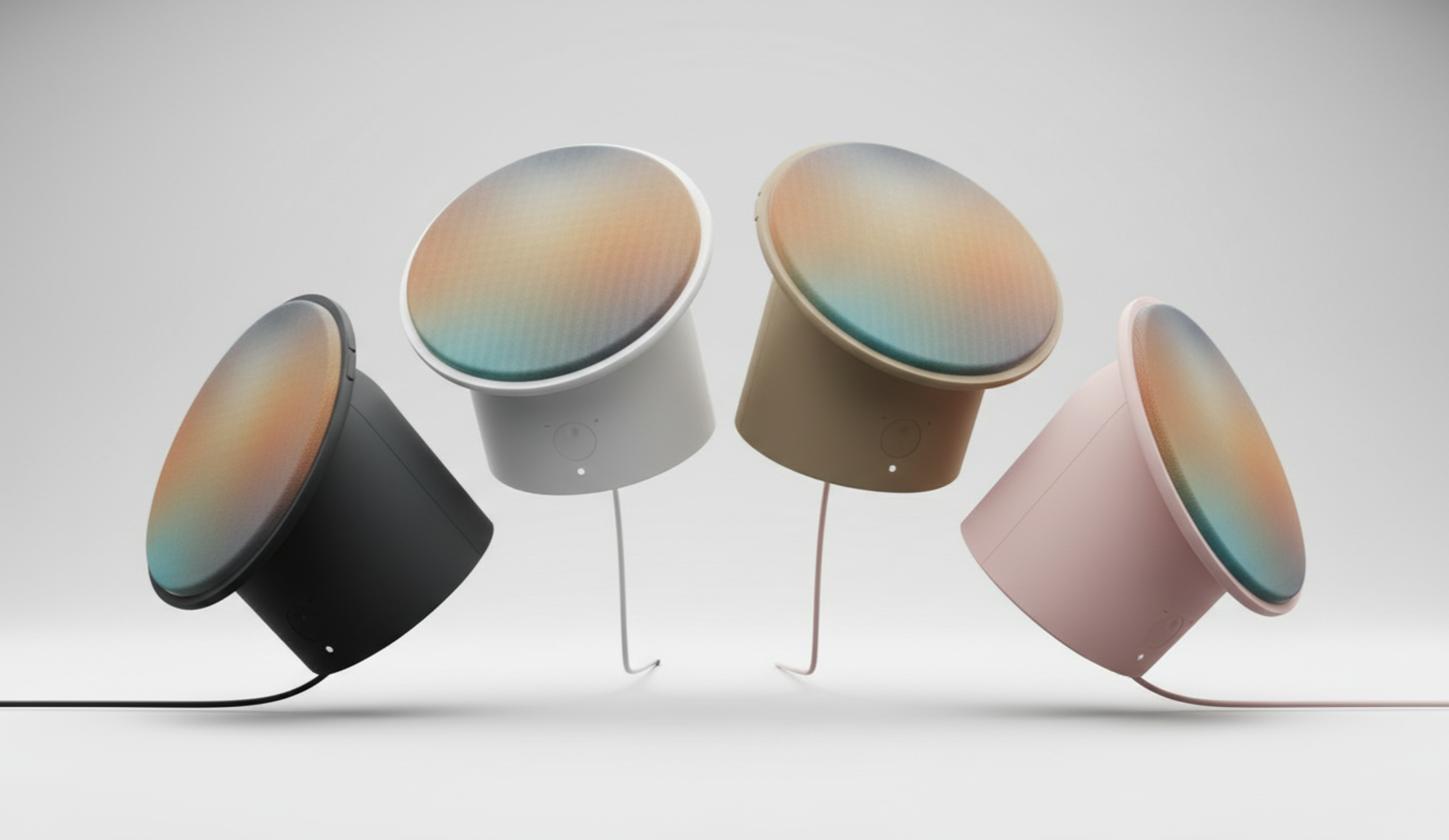
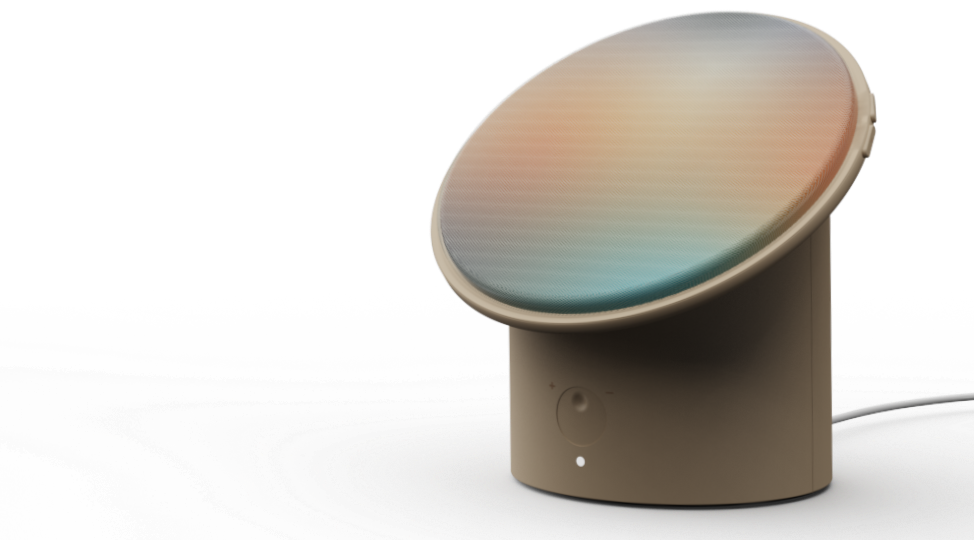
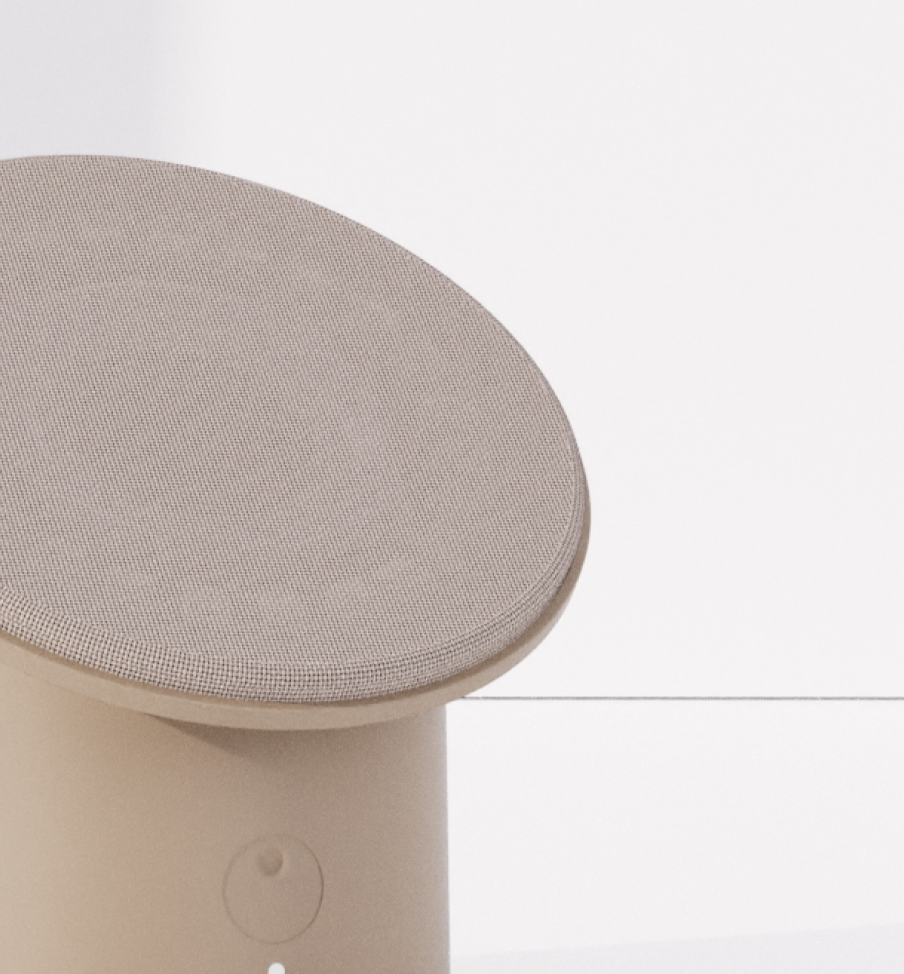
Auri is an accessible PC speaker system that translates sound into light and touch. Designed for individuals who are deaf or hard of hearing, it converts audio into calibrated haptic vibrations and responsive LED feedback, allowing users to experience rhythm, intensity, and atmosphere in real time.
Integrated drivers differentiate frequencies through layered tactile output, while diffused LEDs reflect tonal shifts with subtle visual cues. By expanding audio beyond sound alone, Auri reframes the speaker as a multisensory device; demonstrating how inclusive design can enhance both accessibility and emotional connection.

Research
The Problem
Approximately 11 million Americans identify as deaf or hard of hearing, yet most consumer audio devices fail to account for their sensory experiences. Traditional speakers rely solely on sound, limiting access to the full emotional and immersive qualities of music, film, and digital media.
My research included ethnographic observation of Deaf Twitch streamers and online creators, user process analysis, market research, product breakdowns, and prototype development to investigate how light and vibration can enhance accessibility and transform media immersion.

Ethnographic Research
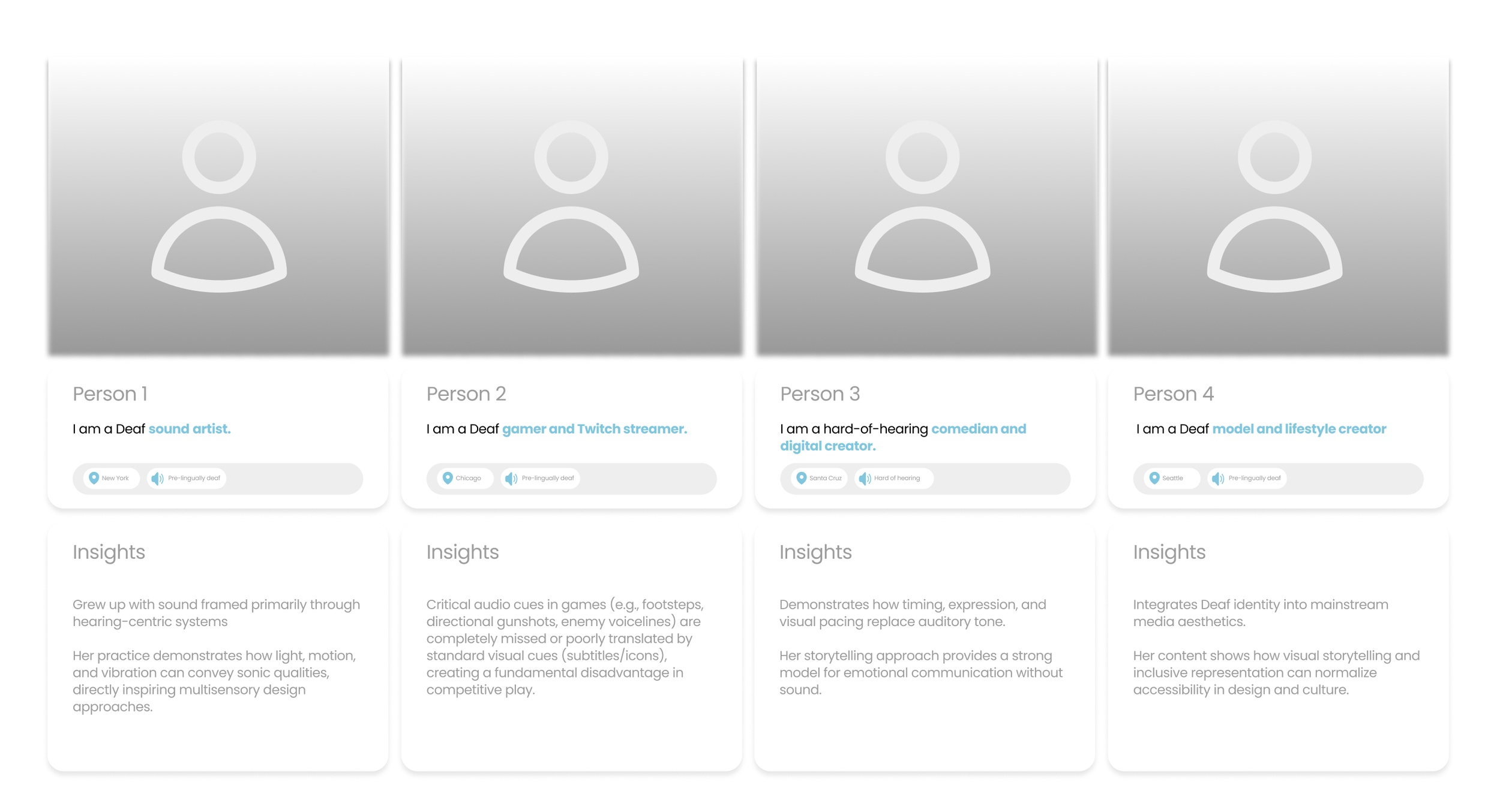
All four individuals navigate environments that are fundamentally designed around sound. Critical audio cues (like directional game sounds, tonal shifts, ambient atmosphere, or vocal nuance) are either inaccessible or poorly translated through subtitles and basic visual indicators. This creates missed information, reduced immersion, and, in some cases, competitive disadvantage.
Current accessibility solutions rely heavily on text or simple visual cues, which fail to convey the emotional, rhythmic, and atmospheric qualities of sound.
Observational Research
While playing CS:GO, one of my friends (Alex) could not hear any of the game’s sound cues because we intentionally turned off his game volume and removed his access to audio in the Discord call. This created an immediate and noticeable gap in his reaction time, map awareness, and overall game play experience compared to the rest of us. Observing how much critical information he lost without sound became a key part of my research and highlighted the need for a haptic and light-based sensory speaker designed for deaf and hard-of-hearing players.

Observational Research

Ideation
Mood Board
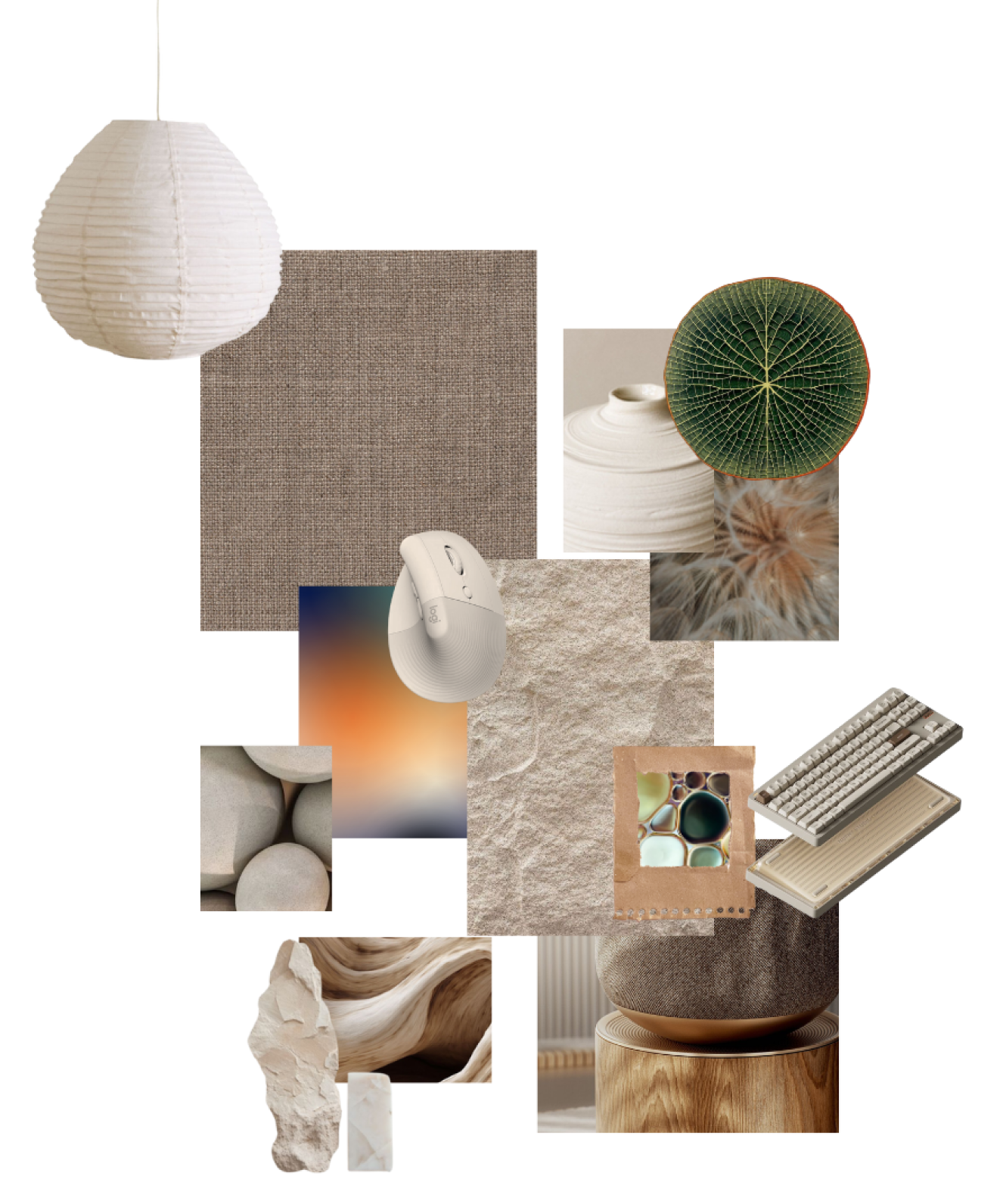
Emphasis on natural materials, soft forms, and calming neutral tones. Textures like linen, stone, and ceramic inspire a warm, tactile product, while subtle lighting references support gentle visual cues. Overall, it conveys a peaceful, sensory-rich experience.
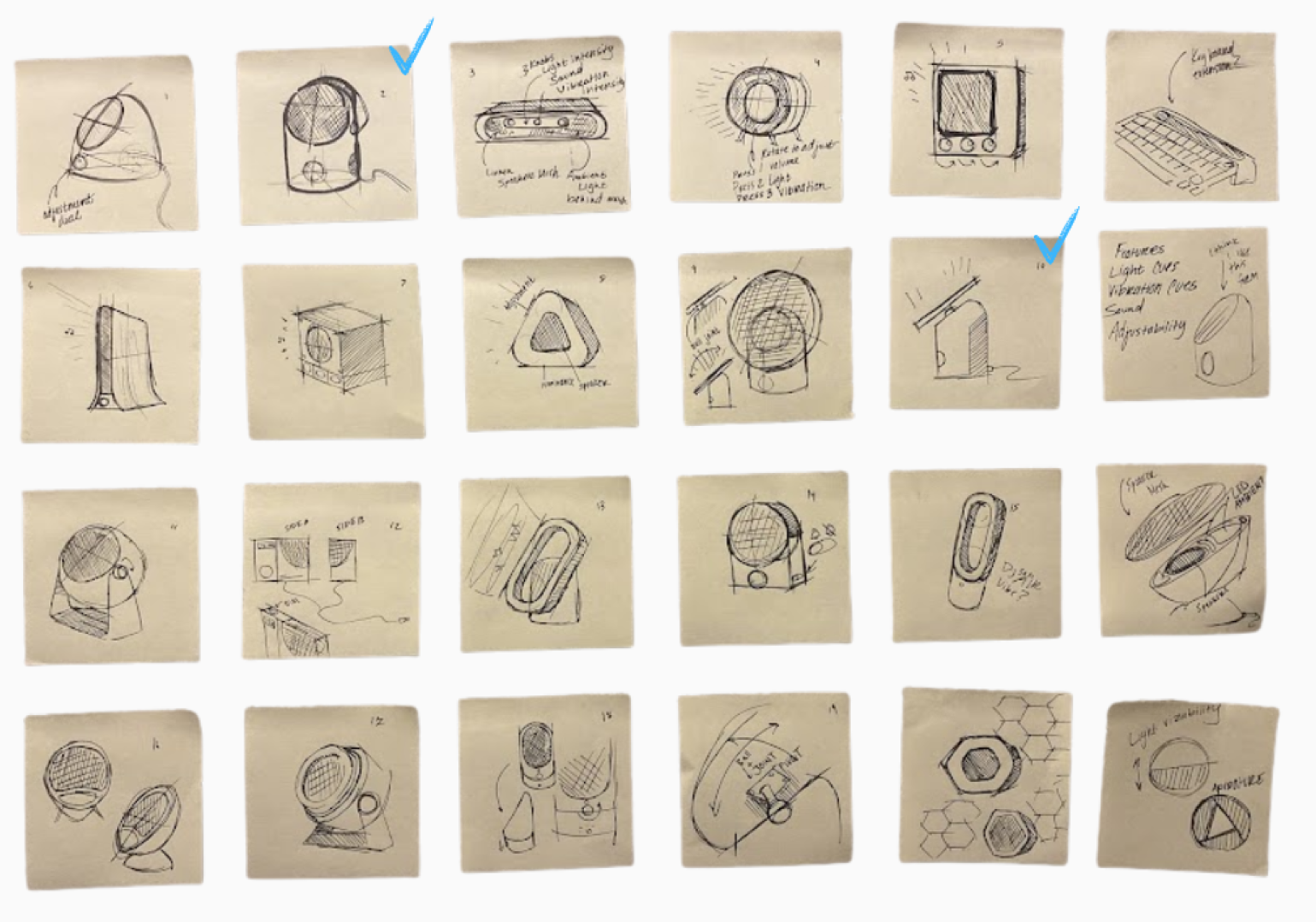
Sketches
An accessible PC speaker for everyone

Exploded view.

This exploded view reveals the internal structure and layered construction of Auri. The outer shell opens to expose a centrally positioned speaker driver, encircled by a ring of LED components and supported by an integrated haptic motor within the body. A perforated, clouded diffuser softens the LED output before it passes through the front mesh, creating an even ambient glow.
The battery and weighted base are strategically placed to provide stability and wireless functionality. The concentric arrangement of sound, light, and haptic elements emphasizes a unified focal point, illustrating how each component works together to deliver a cohesive multisensory experience.

Using a connectivity approach inspired by pre-existing advanced lighting technology, the system captures visuals and audio instantly and syncs effects across the speaker’s LED display and haptic modules with low latency.