



Auri
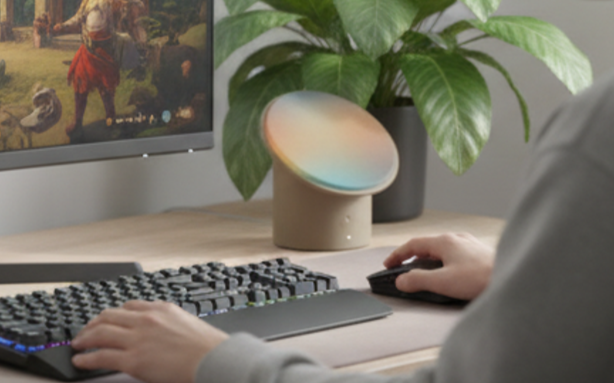
Auri is an accessible PC speaker system that translates sound into light and touch. Designed for individuals who are deaf or hard of hearing, it converts audio into calibrated haptic vibrations and responsive LED feedback, allowing users to experience rhythm, intensity, and atmosphere in real time.
Integrated drivers differentiate frequencies through layered tactile output, while diffused LEDs reflect tonal shifts with subtle visual cues. By expanding audio beyond sound alone, Auri reframes the speaker as a multisensory device; demonstrating how inclusive design can enhance both accessibility and emotional connection.
Research
More Than Visibility

Body Clock
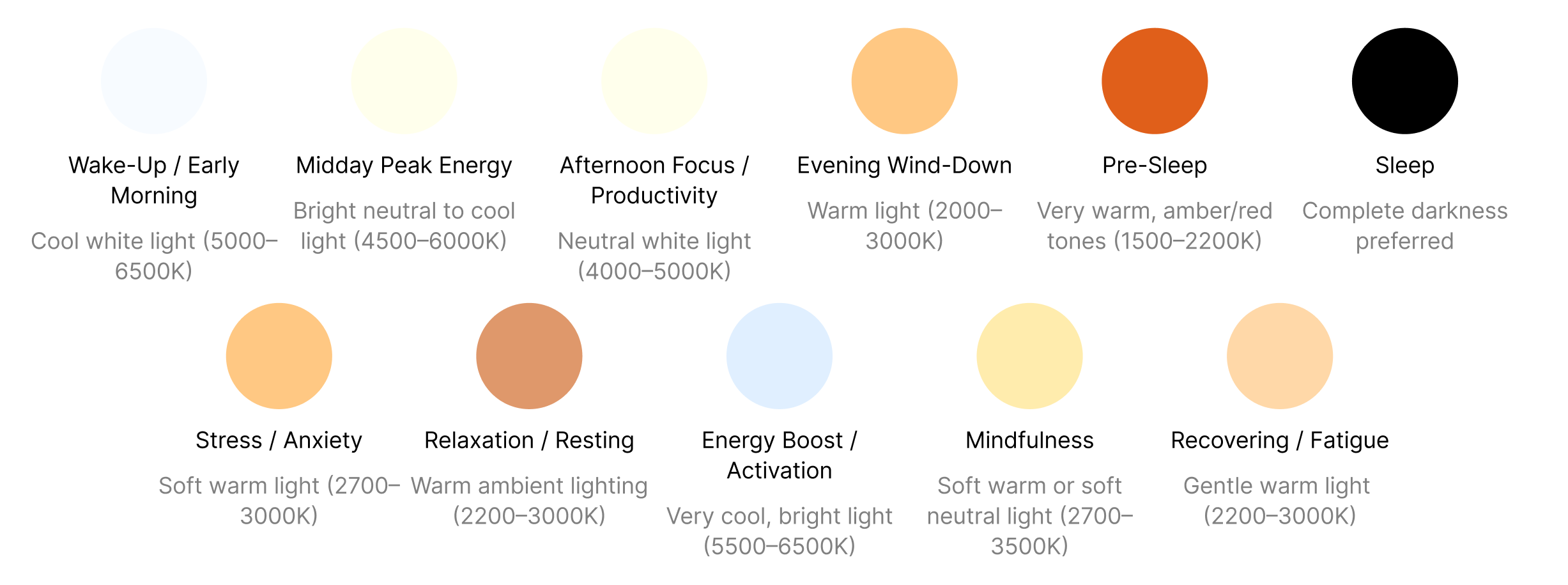
Light is the main cue that controls our circadian rhythm, the 24-hour internal clock that regulates sleep and wake cycles.

Mood
Light strongly affects mood by influencing brain chemicals such as serotonin.

Cognitive Performance
Light enhances attention and mental performance.
The Problem
68% of adults report feeling tired or fatigued during the day at least three times per week.

The lighting systems we interact with daily are not designed with our wellness in mind.
The human circadian clock is biologically calibrated to the gradual changes in sunlight; however, constant-intensity LED and fluorescent lighting disrupt these natural signals.
More Than Visibility

How Light Affects Us.

Ideation
Mood Board
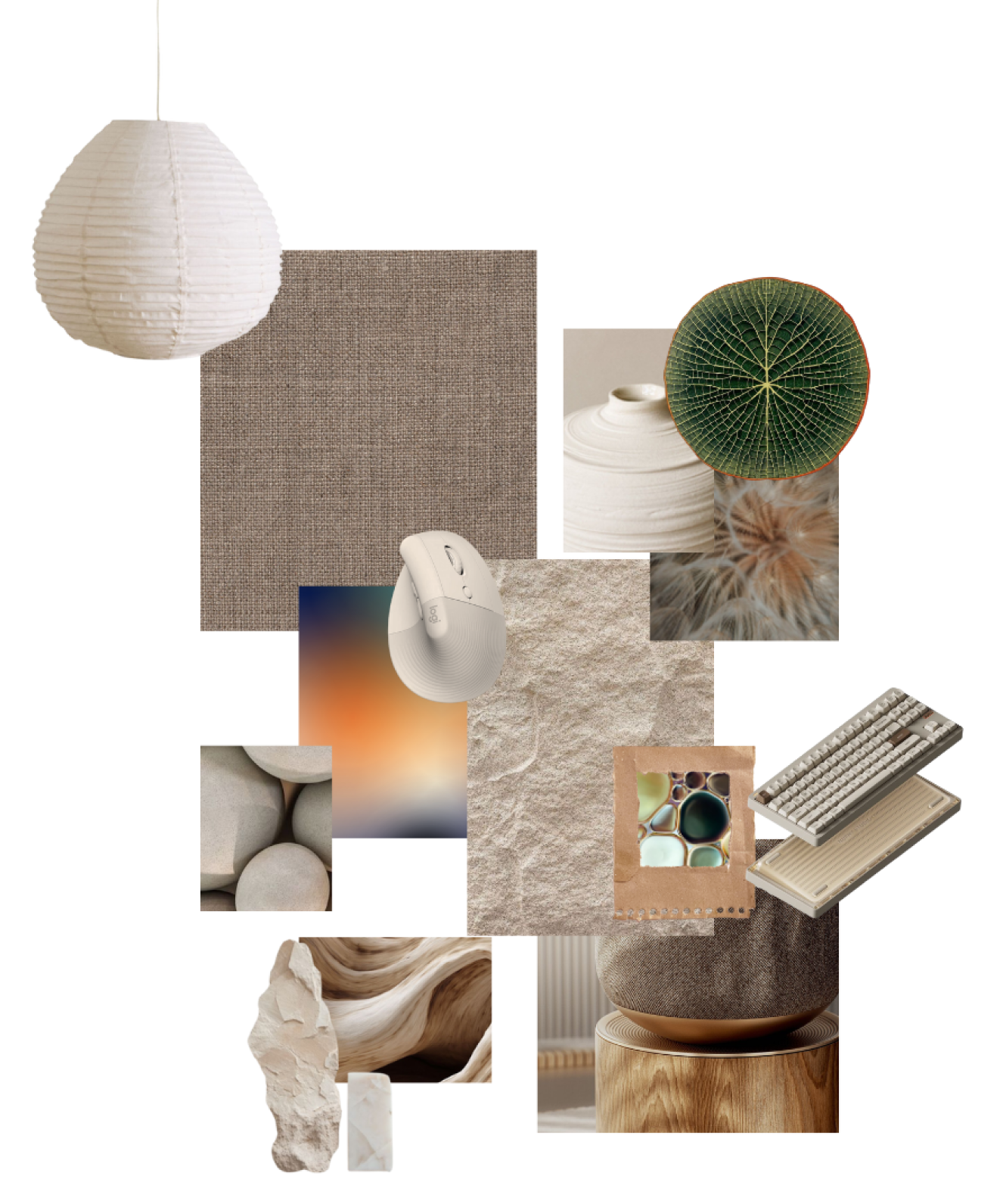
Emphasis on natural materials, soft forms, and calming neutral tones. Textures like linen, stone, and ceramic inspire a warm, tactile product, while subtle lighting references support gentle visual cues. Overall, it conveys a peaceful, sensory-rich experience.
Sketches
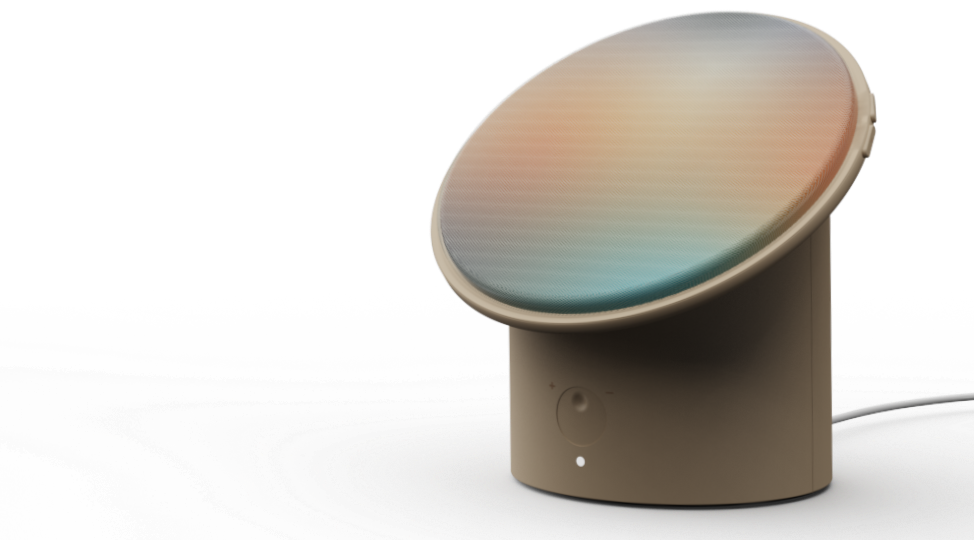
An accessible PC speaker for everyone
100% of participants reported low natural light exposure and ongoing challenges with energy or feeling fully rested, despite averaging 6–8 hours of sleep and moderate sleep quality ratings (6–7/10).
Across all interviews, users associate their lighting environment with fatigue, difficulty waking, or afternoon slumps.
Using a connectivity approach inspired by pre-existing advanced lighting technology, the system captures visuals and audio instantly and syncs effects across the speaker’s LED display and haptic modules with low latency.


Exploded view.
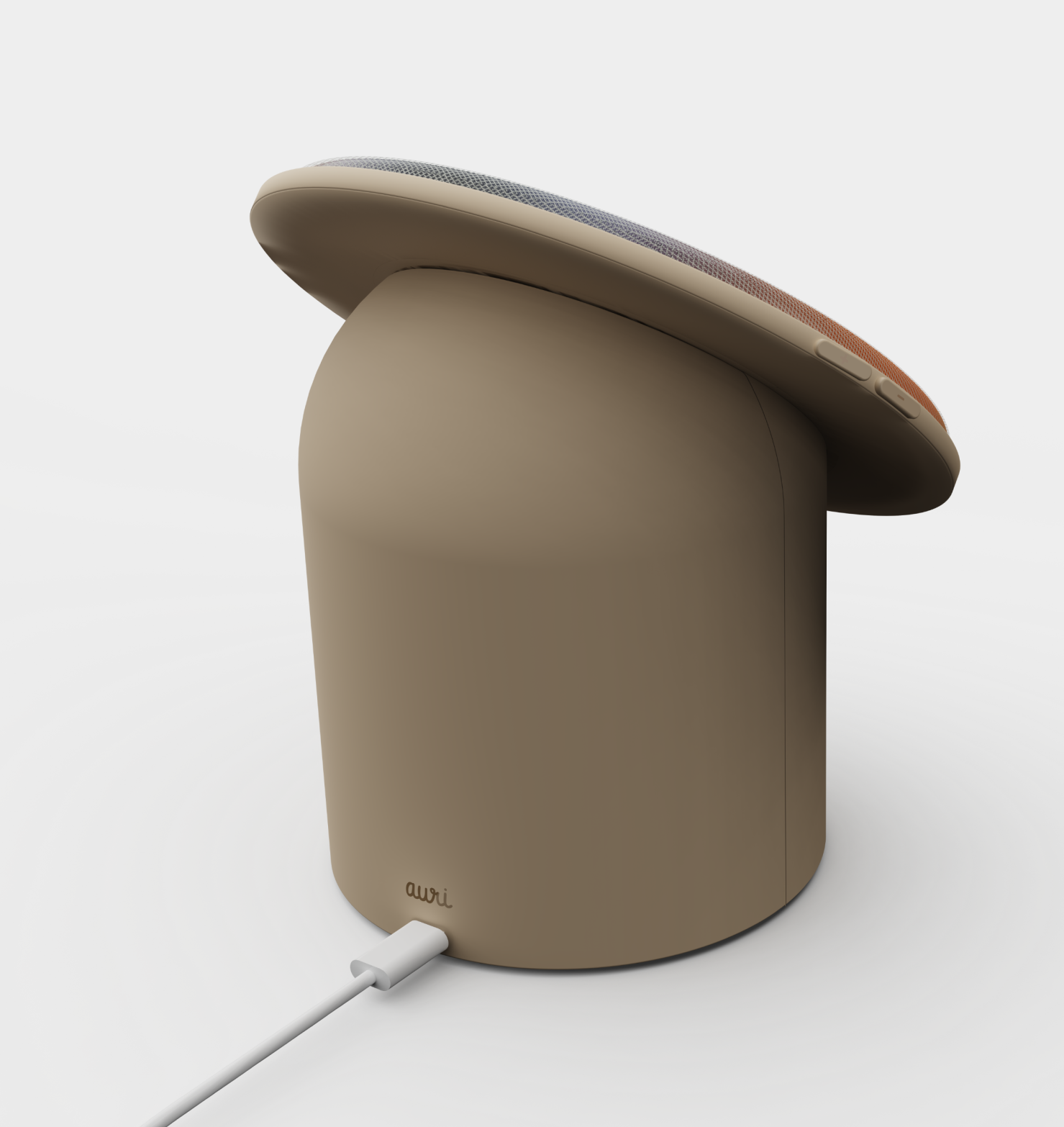
This exploded view reveals the internal structure and layered construction of Auri. The outer shell opens to expose a centrally positioned speaker driver, encircled by a ring of LED components and supported by an integrated haptic motor within the body. A perforated, clouded diffuser softens the LED output before it passes through the front mesh, creating an even ambient glow.
The battery and weighted base are strategically placed to provide stability and wireless functionality. The concentric arrangement of sound, light, and haptic elements emphasizes a unified focal point, illustrating how each component works together to deliver a cohesive multisensory experience.

